Sunday, 11 August 2019

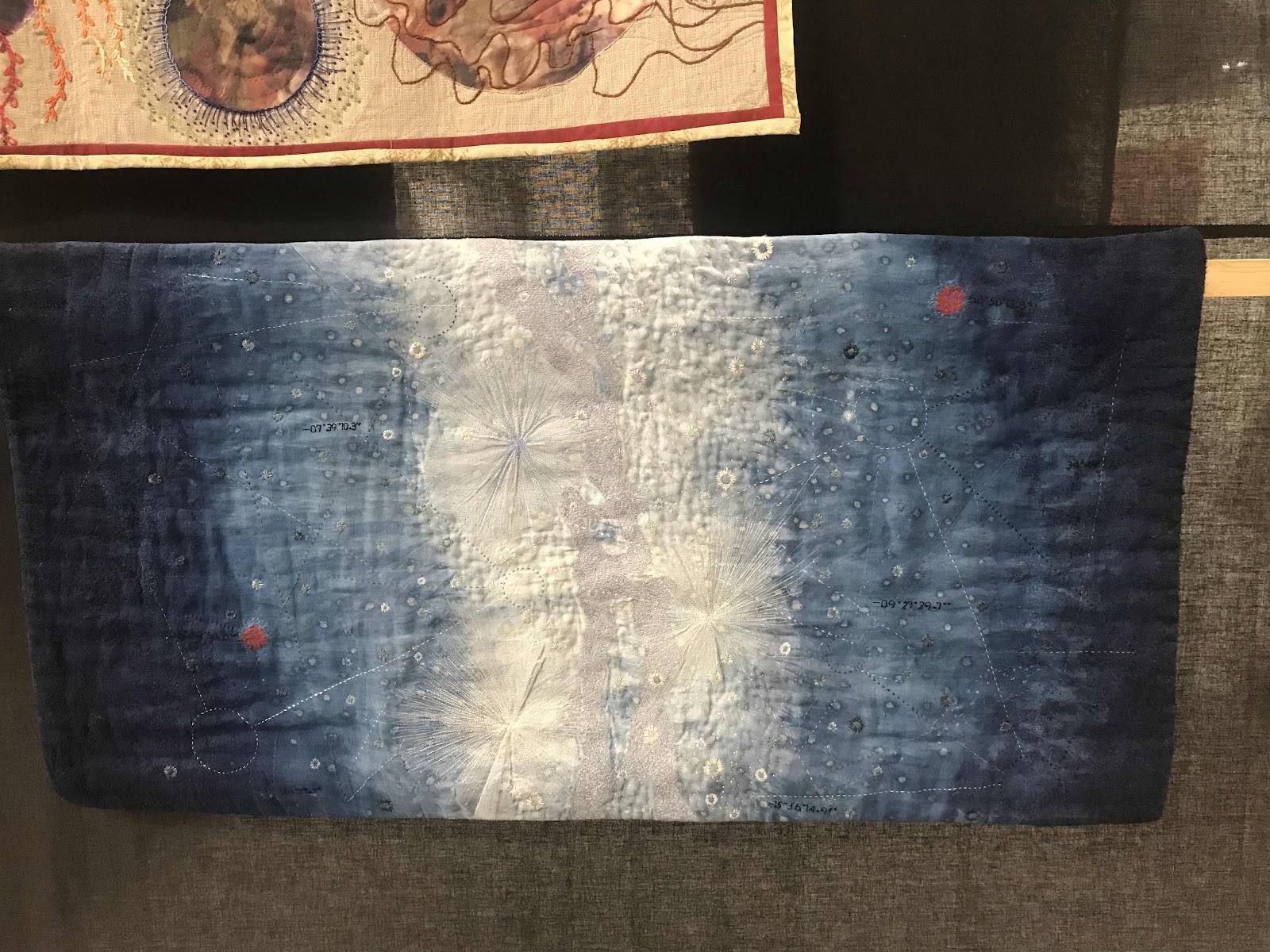
Backbone of the night II at the Festival of Quilts 2019

Textile quilt
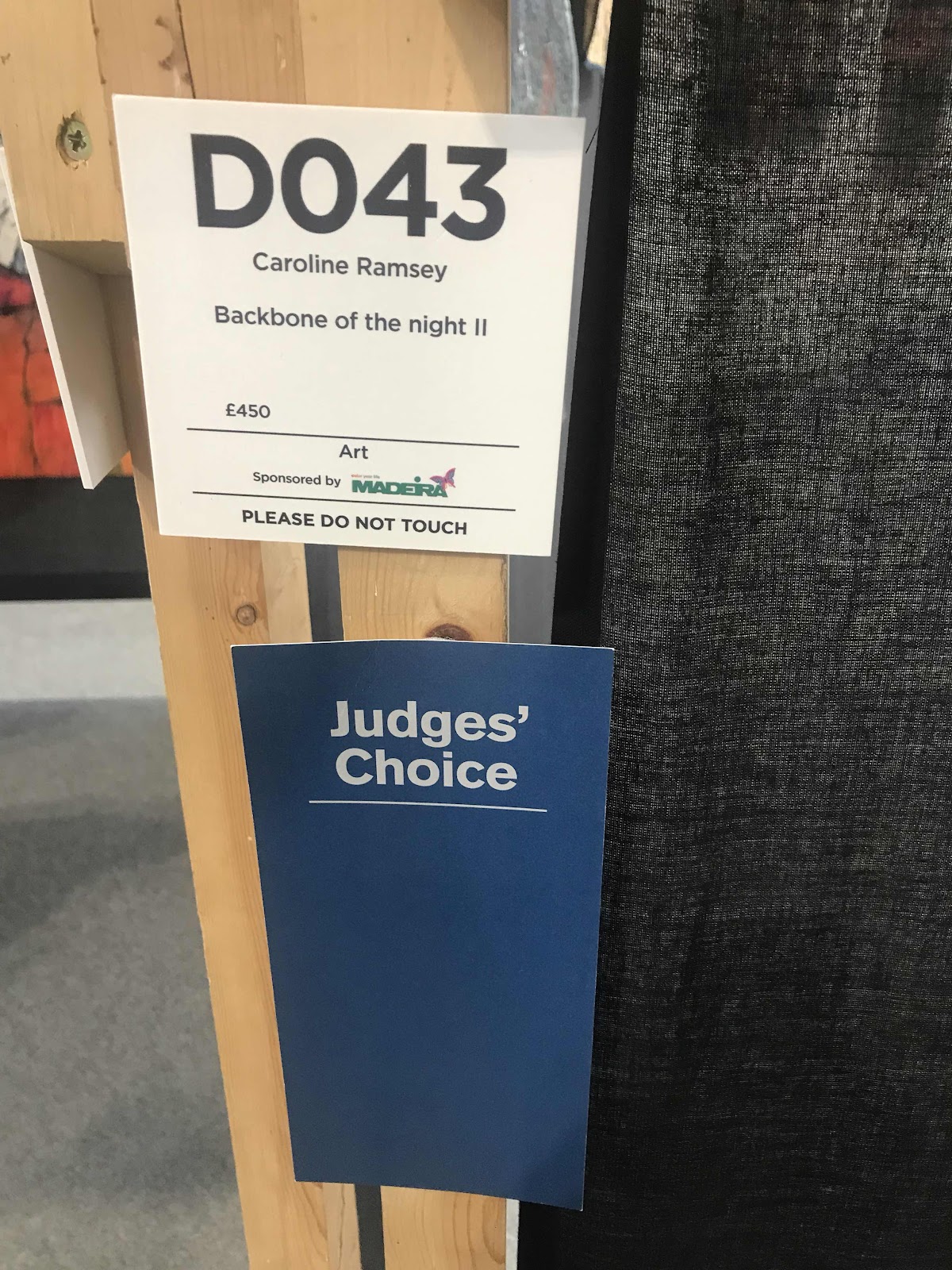
At this year’s Festival of Quilts, I exhibited my work “Backbone of the night II” in the Art Quilt section. I did not know until I visited to pick it up that it was chosen as a “Judges’ choice”. A lovely surprise for me!

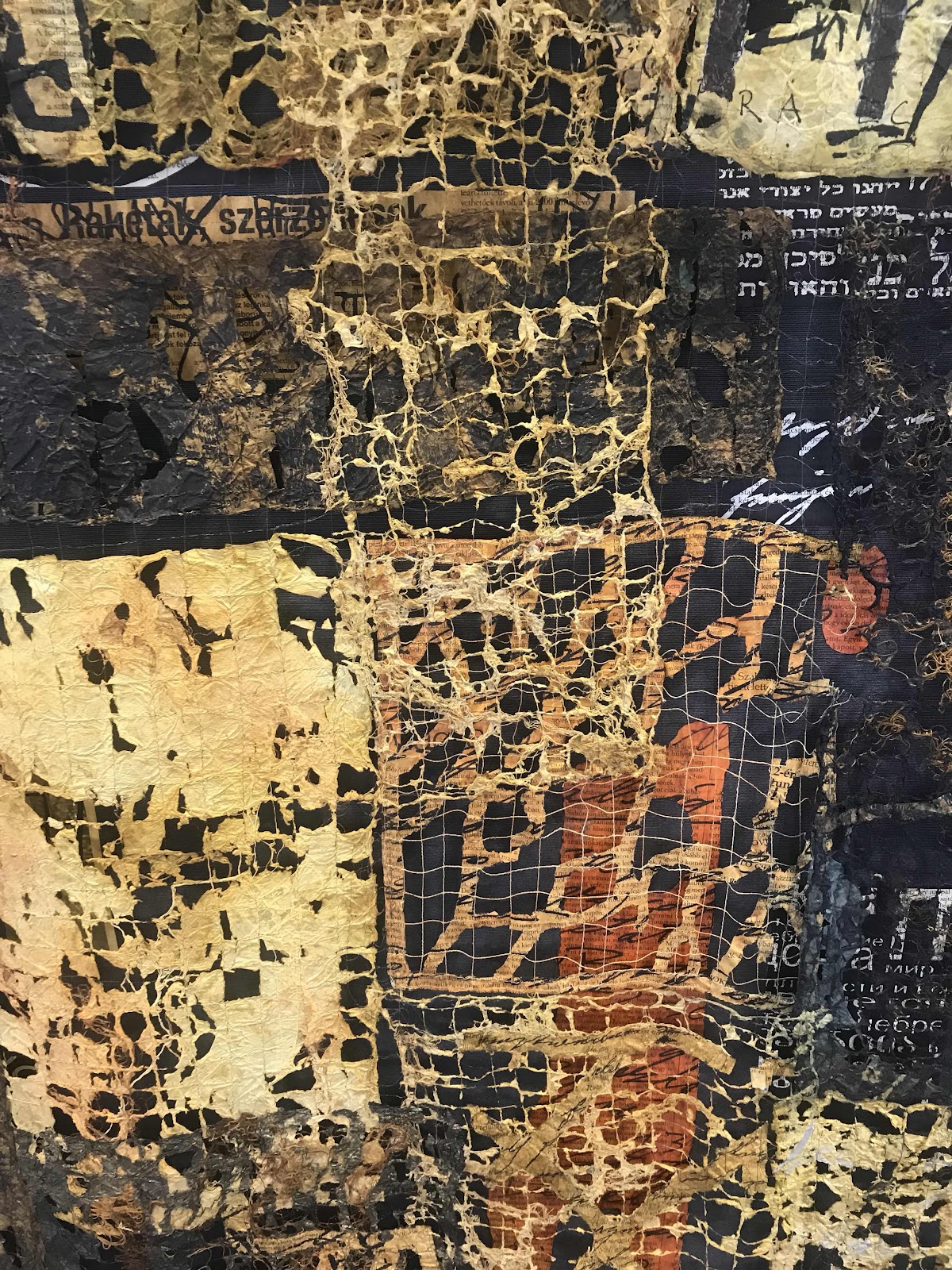
I love visiting this event to see all the galleries of established textile artists work and this year, India Flint was showing some of her work. For those not familiar with her work, she is well known for eco dyed textiles and their connection  with her journeys around the world.


I’m always amazed at the skill and effort by the quilt makers at this event, far more patience that I can muster! There’s quilts made by children, groups, two persons, novices and experienced persons. Recurring themes are environmental concerns and Brexit! Though nature is always a popular subject.  

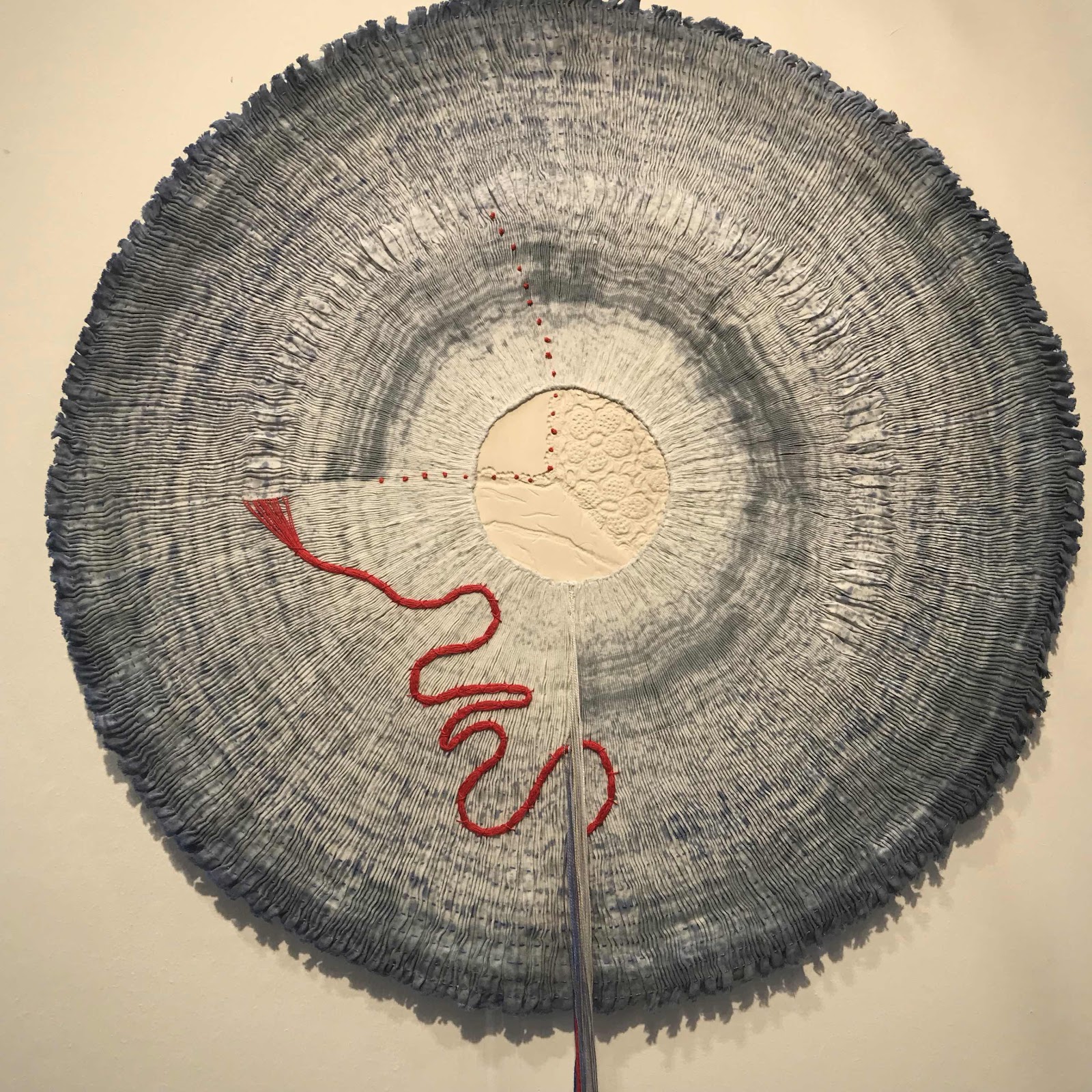
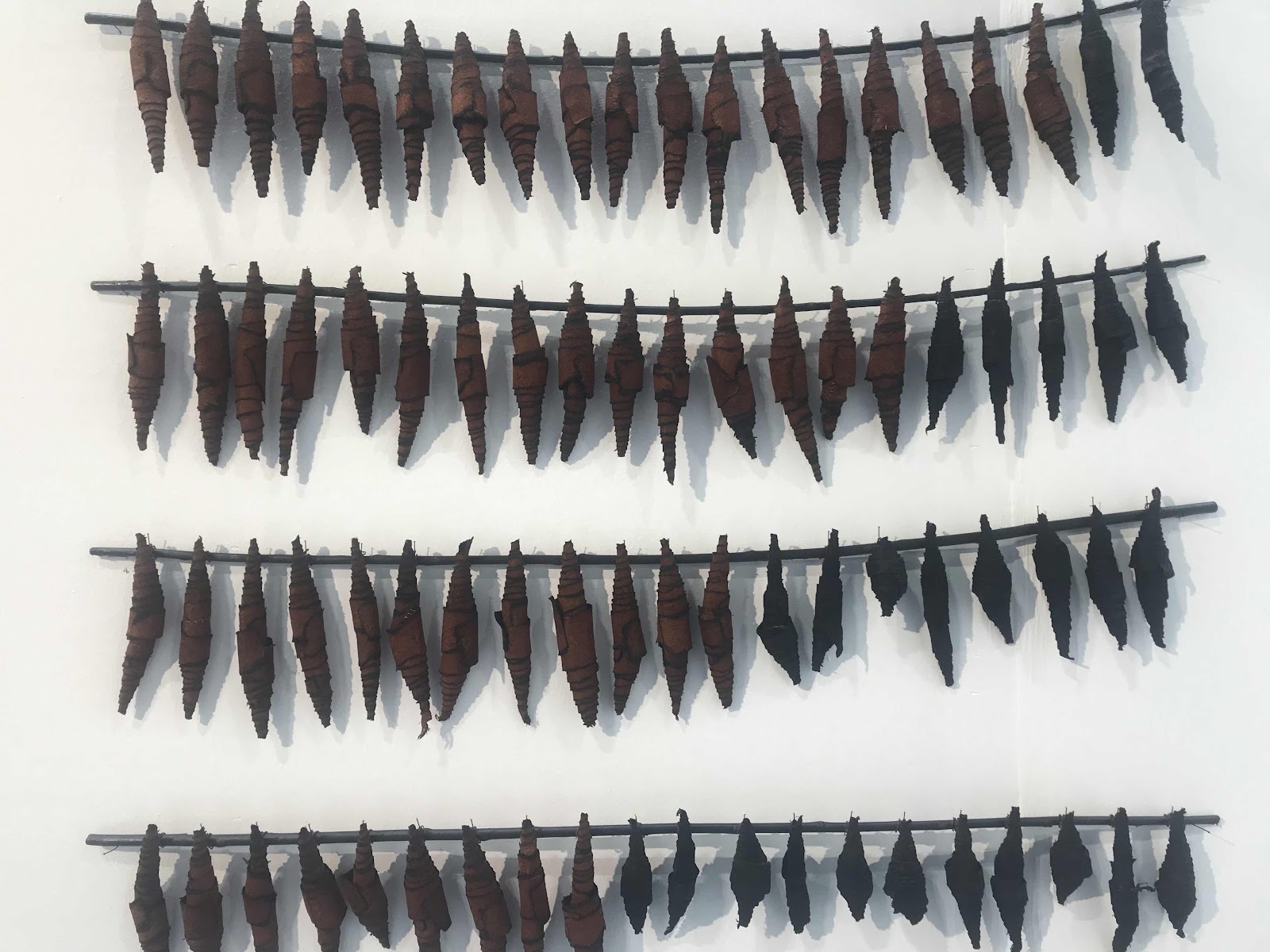
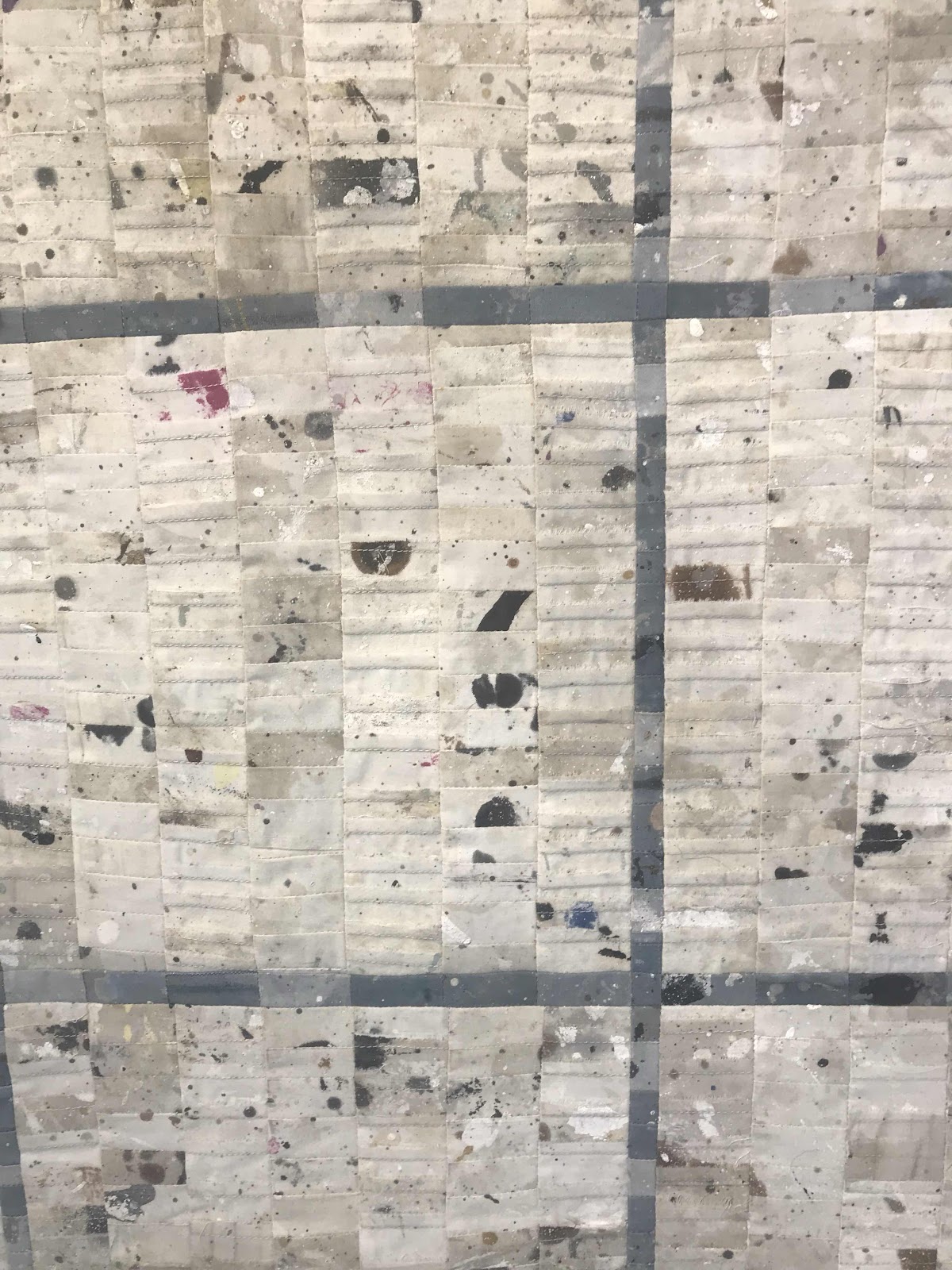
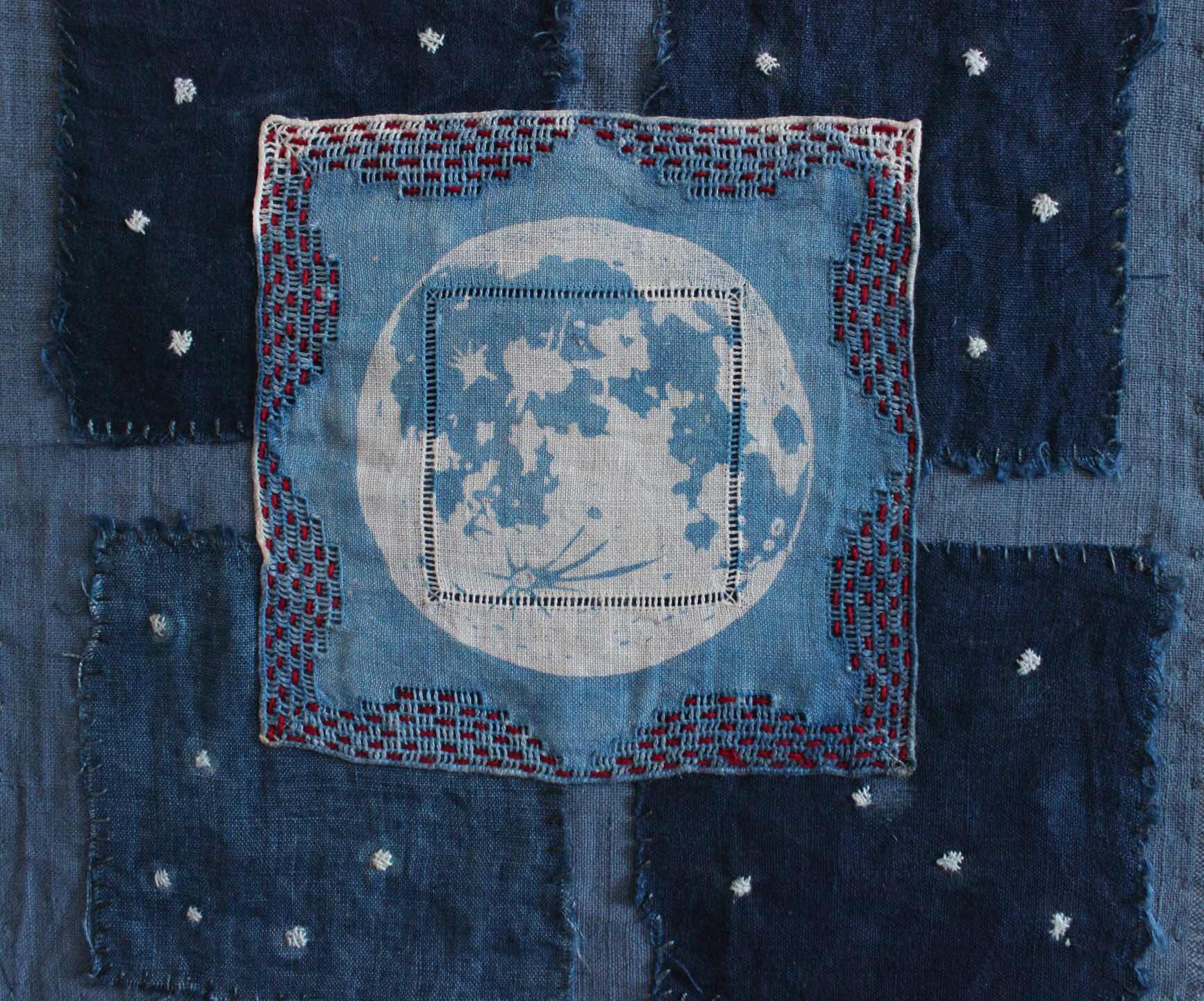
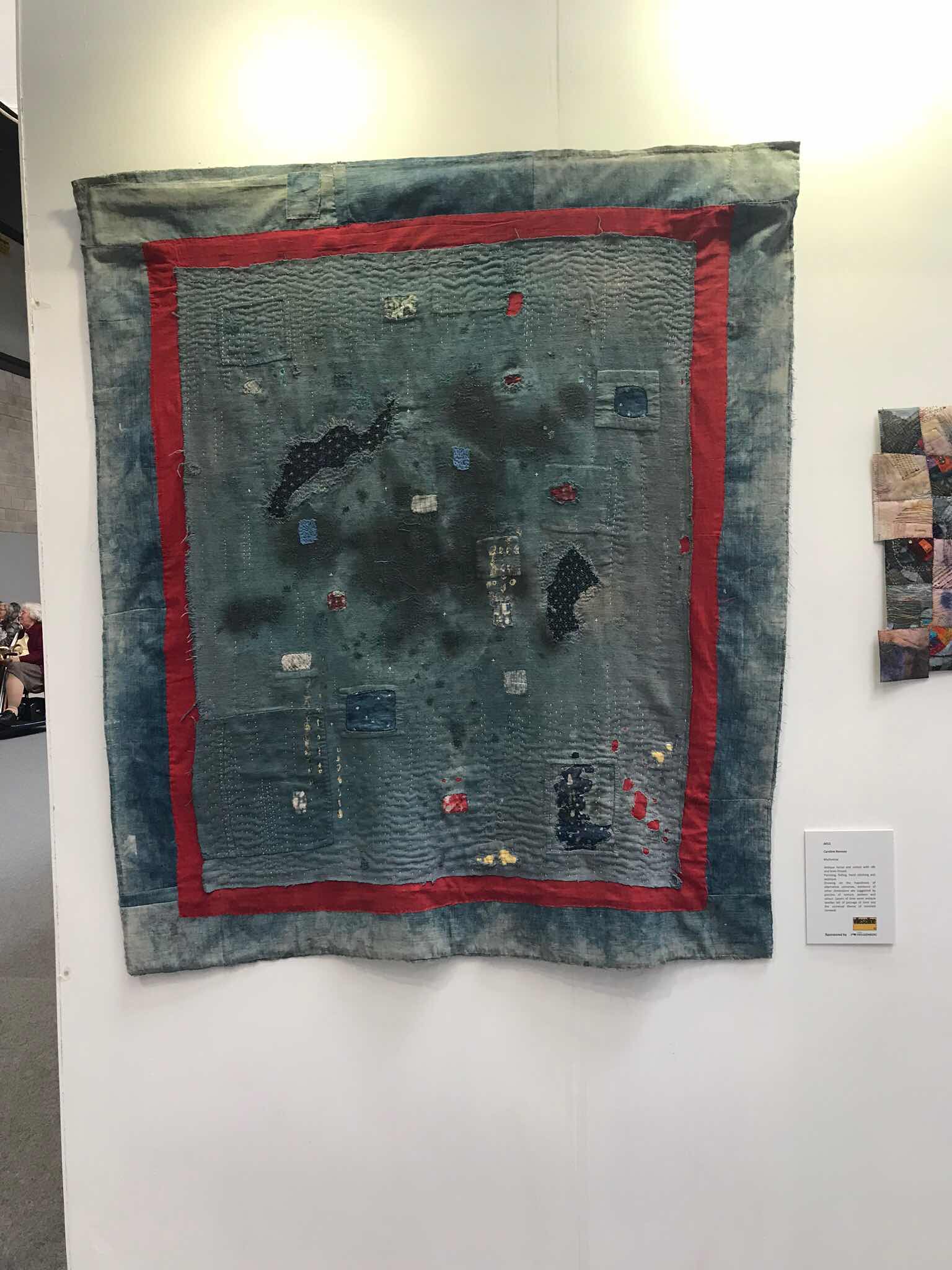
Below is some quilts from the Fine Art Textile Masters gallery:
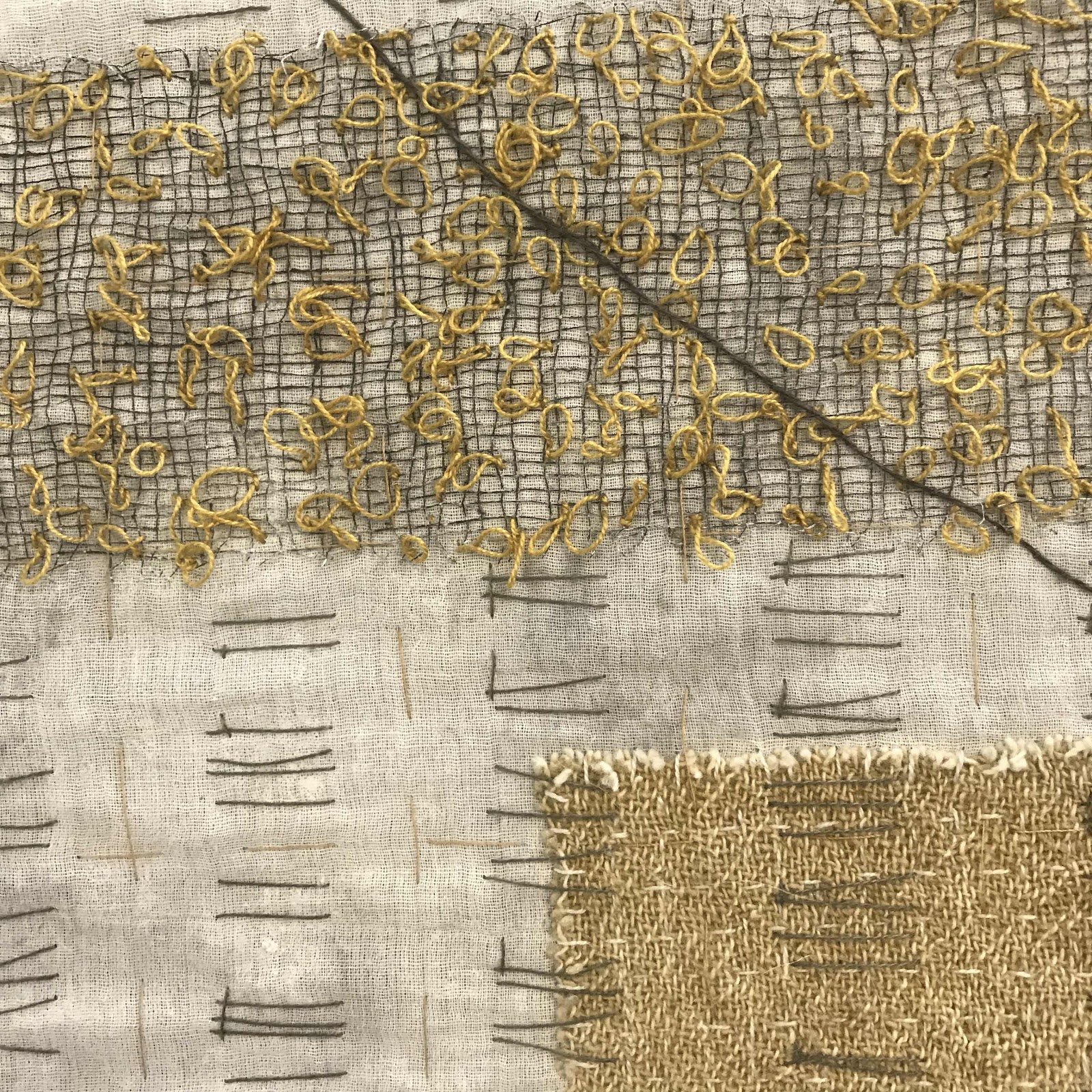
Detail of stitching

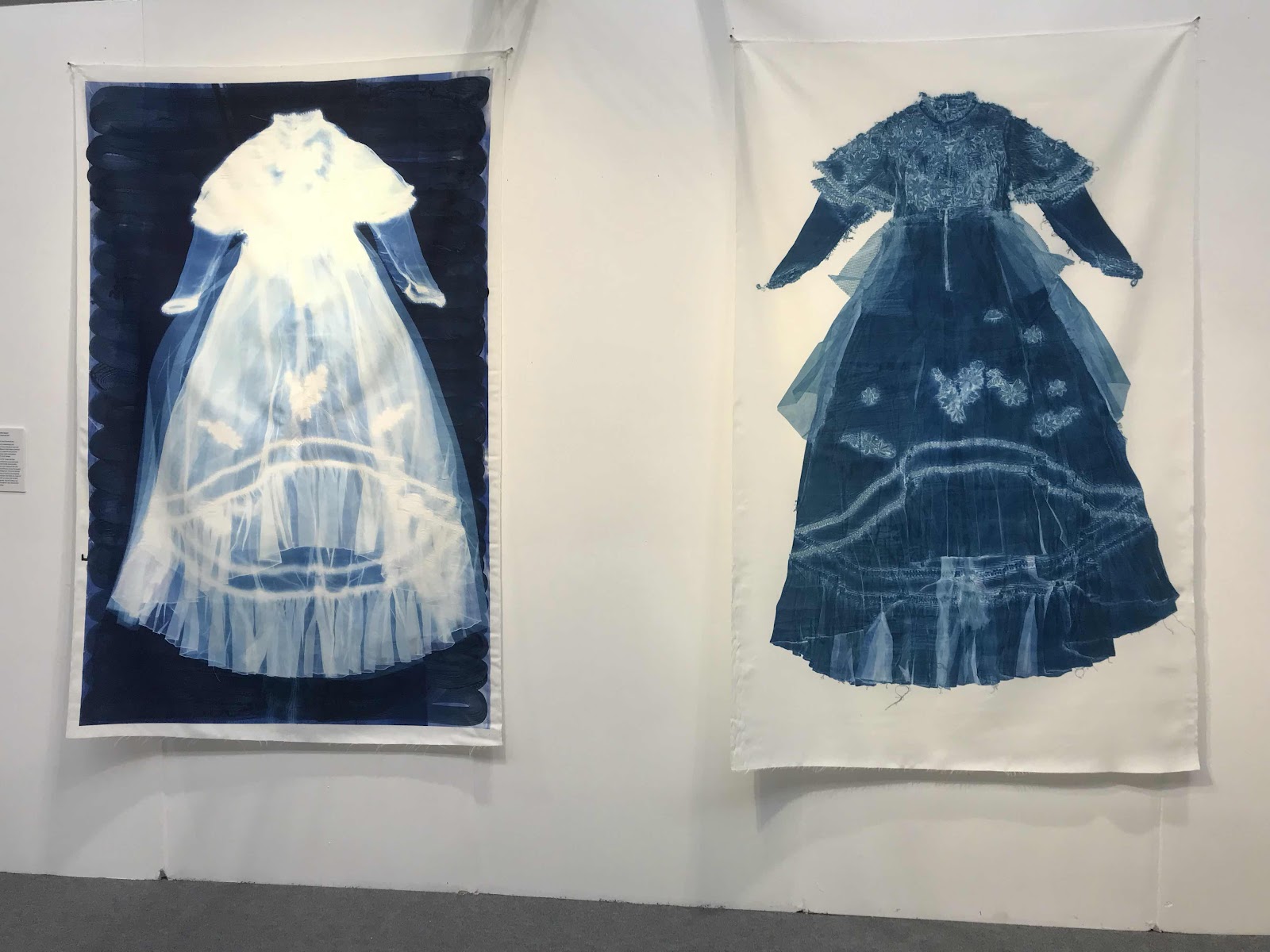
Cyanotypes quilt

Caroline Bartlett work

winning quilt


Friday, 14 June 2019

Backbone of the night II - new textile artwork

Backbone of the night II.  (60 x 112cm). Dyed antique linen, machine & hand embroidery.

Here is my latest textile work, three months in the making. The theme is of course, the Milky Way, of which the title 'Backbone of the night' refers to. I had an idea of extreme contrast of a white centre merging into deepest indigo of which was achieved through a bit of shibori dyeing, tightly wrapping cord round the middle and multiple dip dyeing. Some cold wax resist was applied to suggest stars and red Victorian fabric circles were needle punched through the main cloth to suggest supernovas.

I liked the idea of mapping the stars and referring to our planet's unique position in the galaxy so coordinates of the nearest stars and projection lines are stitched into the overall design. The piece went through various design stages from sampling to unpicking stitching on the actual piece that didn't work. There was going to be big red hand stitching on the outer edges that I eventually rejected. Through out the making, I constantly think, changing and making decisions which is all part of the process and labour spent on a work.


My work involves using antique and vintage textiles, the rips, darns, pattern and stains all become part of the design. The main fabric is part of a antique linen sheet dyed in indigo. Round the edges of the piece (see photo below), dark blue vintage Japanese fabric has been needle punched from underneath to give a rough worn texture.


I use hand dyed threads in cotton, silk and linen in a variety of thicknesses. Hand stitching in a running stitch is mainly applied all over the work with the machine embroidered design restricted to the centre. I love hand stitching the most as it's satisfying for me to do but also I like to see the handworked element. 

The whole piece is then backed onto a light cotton batting and vintage cotton sheeting with a bias bound edge to help give body to it. Eventually, once the piece has been exhibited at the Festival of Quilts this August, it will be mounted and framed so it's more easy to sell as an artwork.

So hopefully, this gives a better understanding on what makes a textile artwork. 


Tuesday, 16 October 2018

Anni Albers at the Tate Modern

Anni Albers exhibition
On until 27th of January is a exhibition on Bauhaus weaver Anni Albers at the Tate Modern. I wasn’t familiar with her work as textile artists are not as mainstream unlike painters and designers, so it was thrilling to discover a textile pioneer! Work from the 1920s till the 1960s was displayed in a major retrospective of her ideas, textiles and her writings on the history of weaving.

She was first introduced to the art of weaving at the radical art school, the Bauhaus in Germany as an alternative to painting as that wasn’t deemed suitable for ladies to study! 

Weaving is a craft skill that I am fascinated with and if I had the time would try a short course for my own interest. It was mesmerising looking at Anni Albers work up close to see the colours, textures and sheer complexity of her weaving skills. I absolutely loved this exhibition and was amazed and quite hearten by the fact it was given a platform by such a major gallery. There still is a major climb in the general public’s perception in textiles as “art”, as exampled by bored students visiting, overheard dismissing the work as rugs! The teacher with them was no help as he remarked “we don’t do weaving, do we?” 

Hopefully, if more artists textiles were given this type of serious academic attention then the views will gradually change. I would definitely recommend this exhibition to anyone visiting London.


Sunday, 7 October 2018

Method in making.


Over the past few months I’ve been making some textile pieces using the antique textiles collected from dealers in the past year. I consciously tried to avoid buying indigo and Japanese fabrics as I’ve a considerable stash already, and tried to find unusual patterns instead.

People like to know where ideas and inspiration comes from and must say that I don’t have a particular idea in mind when starting, sometimes a vague idea of a look I want to achieve. My love of boro of course, has not diminished, I love distressed, aged and delicate textiles and this influences my work. 

In the past with other artwork, I used sketchbooks and developed ideas with paper and fabric sampling. I find that doesn’t suit my current work as I use antique textiles and they are one of a kind pieces. The fabrics lead me with the design and as any textile lover will know, just playing with the fabrics will bring up multiple ideas. It doesn’t always work and have some abandoned and “I don’t like it” work to prove it!

Years studying art and design, and my degree in costume learning many disciplines of surface decoration, printing  and dyeing, all inform my decisions. Living in London gives me the privilege position in visiting exhibitions on art, fashion and culture, it all goes in and influences me, consciously and unconsciously. Most of all though, the most important aspect for me is the enjoyment and calm making textile art gives and if other people enjoy it too, then all the better. :)

Remains. Texitile workStarry Night. Textile workLuna.Textile workConstellations. Textile art


Saturday, 15 September 2018

Festival of Quilts- Fine Art Quilt Masters 2018

photo of quilt masters brochurephoto of entry in brochure


Back in August I visited the NEC in Birmingham for this year’s Festival of Quilts. It’s a huge event in the textile calendar for exhibiting quilts, buying supplies and workshops for those interested. I was lucky to be shortlisted for the Fine Art Quilt Masters which is a juried competition for quilts that transcend into fine art rather than pure quilting. There were 21 quilts chosen this year from over a hundred submissions so I was very honoured to have my quilt “Multiverse” chosen.

It was good to see all the quilts on show during the festival as there was a huge variety of  techniques applied and quirky interpretations on themes. I went primarily to pick up my quilt after the festival finished but managed somehow to come away with a good stash of haberdashery and fabrics! 


Display of quilts Fine Art Masters exhibition


Multiverse


Tuesday, 29 May 2018

Multiverse - quilt for the Festival of Quilts


Multiverse- art quilt


For the past 3 months, I have been working on a very large wall hanging with the intention of submitting it for the Festival Of Quilts, Fine Art Quilt Masters competition. It is a big event in the textile calendar attracting huge visitors to the hundreds of quilts on display, workshops, exhibitions and shopping for craft supplies. It is held every year at the NEC arena in Birmingham and I visited it a few years ago and was impressed by the variety of work on display.

With the great intention of applying and making a quilt for entry for the past few years, I finally found the time to do it. Of course, having an idea to implement is also part of the worry as there has  to have a visual impact for a large piece (one side has to be at least 1 metre). I did’t have any set idea in mind as an idea organically changes once you start putting texture, colours and pattern together. I did though plan the top layer of the quilt to be a large cyanotype print but as I washed the fabric out, the print disappeared! Back to the drawing board...

So here it is. "Multiverse" is a large wall hanging completely made from antique and vintage fabrics. The main textile is a 19th century hemp dyed in indigo, worn, patched and mended. Behind the holes and patches, contrasting coloured and pattern fabrics, vintage quilt pieces and Japanese textiles are placed.

Detail of stitching on quilt

Areas of the quilt are heavy stitched by hand to create texture and colour. I have mainly used dyed linen and silk threads with sashiko cotton thread being the bind through the fabric layers. The finished piece is 147cm x 125cm with three main layers. The whole piece is in fact, all hand stitched as I love stitching by hand, but also adds the unique element of human contact. I am not a precise stitcher and would never call myself an embroiderer, but nor am I interested in perfection either! 


The striking red that edges round, is from a 19th century quilt backing and the outer fabric is from the edges of a paste-resist 19th century Chinese textile. These wonderful fabrics have a lovely soft worn look that only the passing of time can produce.


The title of the piece, "Multiverse" refers to the hypothesis of alternative universes coexisting with our own. The swatches of colour, pattern and densely stitched areas represent the different time dimensions. The constant renewal of materials whether it be molecules, gasses or fabrics is a source for exploration and the “boro” ideology is an excellent example of reusing textiles to this effect.

I am thrilled to say that it has been shortlisted with 22 other amazing quilts for the Fine Art Quilt Master competition with the winner being announced on the 8th August after the judges have seen the quilts. They will then be on show at a special gallery within the exhibition hall from the 9-12th August. I will be visiting the Quilt Festival myself and will post some photos of it in situ in a later post.


Detail of patches and stitching


Friday, 25 May 2018

Work in progress...


I’m currently working on a large quilted hanging to be hopefully on display at the Festival of Quilts in NEC Birmingham this summer. All made from antique and vintage textiles, mainly 19th century, it follows my inspiration of the Japanese technique of “boro”. It is all hand stitched in a running stitch, densely in some areas.

The main fabric is a indigo dyed hemp from 19th century which had been patched and darned. These lovely areas show the passage of time and evidence of unknown person’s handiwork, a dream for any textile enthusiast! I have mixed vintage quilt pieces with Japanese patterned fabric also vintage, some appliquéd, others reversed appliqué. 

All the stitching is by hand as it gives such a lovely texture and randomness using linen, silk and cotton threads. It is an important part of the overall look of the piece and part of the “boro” aesthetic to have a human element and irregularity about it. 


I love having flashes of colour so have used a 19th century red cotton that was originally a quilt backing. Now it’s back to be used in a quilt again!